Introduction
WhatsApp is not just a messaging app in India. It is the primary digital communication channel for hundreds of millions of people. Your customers are already on WhatsApp, already using it to communicate with friends and family, and already comfortable conducting business conversations through it.
Yet most businesses use WhatsApp informally: sending messages from personal accounts, losing conversation history when staff changes, and failing to leverage the platform's business features. This article outlines a structured approach to WhatsApp marketing for Indian local businesses.
Why This Topic Matters for Your Business
WhatsApp has over 500 million users in India. For many customers, particularly in Tier 2 and Tier 3 cities, WhatsApp is their primary digital interface.
The open rate on WhatsApp messages is significantly higher than email or SMS. Most messages are read within minutes of delivery. For time-sensitive promotions, appointment reminders, and customer service, this immediacy is unmatched.
For local businesses competing against larger companies with bigger marketing budgets, WhatsApp provides a level playing field. A well-executed WhatsApp strategy builds personal relationships that large companies struggle to replicate.
Core Concepts
### WhatsApp Business App versus WhatsApp Business API
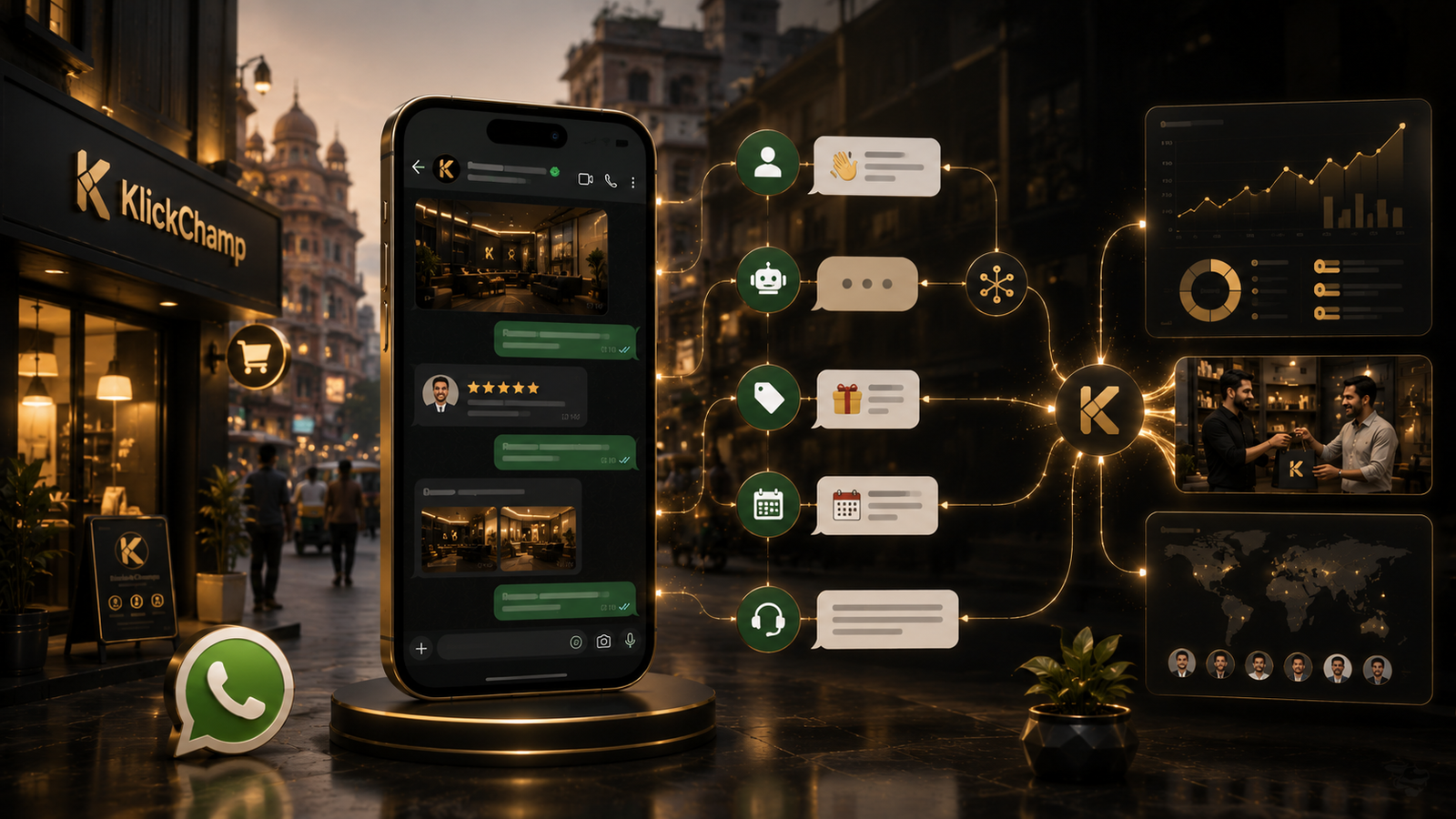
The WhatsApp Business App is a free tool designed for small businesses. It includes a professional business profile, automated greeting and away messages, quick replies, labels for organizing conversations, and basic analytics.
The WhatsApp Business API is designed for medium and large businesses that need to send notifications to large audiences and integrate with CRM systems. Consider the API once your WhatsApp marketing outgrows what the app can handle.
### Setting Up a Professional Profile
Your WhatsApp Business profile is your digital storefront on the platform. Complete every field: business name, category, description, address, hours, website, and email. Upload a professional logo as your profile photo and a relevant image as your cover photo.
### Broadcast Lists versus Groups
WhatsApp groups are problematic for marketing. Members can see each other's numbers and reply to the entire group.
Broadcast lists let you send messages to multiple contacts without creating a group. Recipients receive the message as a personal message, cannot see other recipients, and can reply directly to you. This is the correct tool for sending promotions and announcements.
Build your broadcast lists by collecting WhatsApp numbers from customers who have already interacted with your business. Never add random numbers.
### Catalog and Quick Replies
WhatsApp Business lets you create a product catalog directly in the app. Add your products or services with photos, descriptions, and prices. When customers ask about pricing, you can share catalog items directly in the conversation.
Quick replies are pre-written responses to common questions. Instead of typing the same answer twenty times a day, create templates for frequently asked questions about pricing, hours, location, and services.
### Status Updates
WhatsApp Status is an underused marketing tool. Similar to Instagram Stories, Status updates disappear after 24 hours. Use them to share daily offers, behind-the-scenes content, and customer testimonials.
Practical Business Examples
A local grocery store set up WhatsApp Business with a product catalog including daily fresh produce and household essentials. They created broadcast lists segmented by customer preferences. Each morning, they sent a status update with that day's fresh arrivals. Customers could reply to place orders directly. Within three months, the store reported a 25% increase in daily orders.
A boutique clothing store used WhatsApp to provide personalized styling services. They shared new arrivals organized by style preferences noted during previous interactions. Customers could request specific sizes, colors, or styles and receive personalized recommendations.
Common Mistakes
Using personal WhatsApp for business. When staff members leave, they take all customer conversations with them.
Sending messages without permission. Adding people to broadcast lists without consent violates WhatsApp policies.
Being overly promotional. Treating WhatsApp like a billboard leads to muting and blocking.
Ignoring response management. WhatsApp users expect quick responses. Send promotional messages but take 24 hours to reply to enquiries, and you are using the channel incorrectly.
Best Practices
Get explicit opt-in. Only add customers who have agreed to receive messages from you.
Use labels to organize contacts. Label contacts with categories like New Customer, Pending Payment, and Regular Customer.
Respond within the hour. Set up automated away messages for non-business hours.
Share value, not just promotions. Send useful tips alongside your promotional messages.
Leverage WhatsApp payments. For businesses in India, WhatsApp payments reduce friction in the purchasing process.
Step-by-Step Framework
Week 1: Setup
- Download WhatsApp Business and create your business profile.
- Complete every profile field.
- Set up automated greeting and away messages.
- Create quick reply templates.
- Set up your product catalog.
Week 2: Audience Building
- Add existing customers who have given consent.
- Create broadcast lists segmented by customer type.
- Send your first status update.
- Add a WhatsApp contact button to your website.
Week 3: Content and Communication
- Establish a regular status update schedule.
- Send your first broadcast message with valuable content.
- Respond to all incoming messages within one hour.
- Use labels to organize conversations.
Actionable Checklist
- WhatsApp Business App installed and profile fully completed
- Automated greeting and away messages configured
- Quick reply templates created for common questions
- Product catalog set up with photos and pricing
- Broadcast lists created and segmented
- Regular status update schedule established
- Response time target set and team trained
- WhatsApp contact button added to website
- Messaging policies communicated to all team members
Key Takeaways
WhatsApp marketing works because it meets customers where they already spend their time. Unlike email or social media, WhatsApp conversations happen in a personal, immediate, and direct channel.
The fundamentals are straightforward: professional profile, consent-based list building, segmented broadcast lists, value alongside promotions, and quick responses. For local businesses in India, WhatsApp is not optional. It is the primary communication channel your customers prefer.